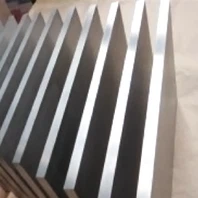
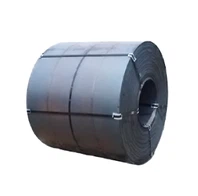
In the demanding world of industrial applications, vessel plate A516GR70 stands as a cornerstone material, renowned for its versatility and reliability in various pressure vessel construction. However, one of the critical challenges faced in its use is enhancing its fatigue resistance. As a dedicated supplier of vessel plate A516GR70, I have delved deep into the intricacies of this issue, exploring effective strategies to boost its performance under cyclic loading conditions. This blog aims to share some of these insights and solutions.
Understanding Fatigue in Vessel Plate A516GR70
Before we can address how to improve fatigue resistance, it's essential to understand what fatigue is and how it affects vessel plate A516GR70. Fatigue is the progressive and localized structural damage that occurs when a material is subjected to cyclic loading. In the case of vessel plates, this can happen due to repeated pressure changes, temperature fluctuations, or mechanical vibrations during normal operation.
The fatigue process typically involves three stages: crack initiation, crack propagation, and final fracture. Microscopic cracks start to form at stress - concentration points, such as surface defects, inclusions, or areas with high residual stress. As the cyclic loading continues, these cracks grow until they reach a critical size, at which point the plate fails catastrophically.
Factors Affecting Fatigue Resistance
Several factors influence the fatigue resistance of vessel plate A516GR70. These include material properties, manufacturing processes, and service conditions.
Material Properties
- Chemical Composition: The chemical makeup of A516GR70 plays a vital role. Elements like carbon, manganese, silicon, and trace elements can affect the material's strength, toughness, and microstructure. For example, an appropriate carbon content can enhance the strength of the steel, but too much carbon can reduce its weldability and toughness, potentially increasing the risk of fatigue cracking.
- Microstructure: The microstructure of the steel, such as ferrite - pearlite, can also impact fatigue resistance. A fine - grained microstructure generally provides better fatigue performance as it offers more barriers to crack propagation.
Manufacturing Processes
- Heat Treatment: Proper heat treatment can significantly improve the fatigue resistance of A516GR70. Processes like normalizing, quenching, and tempering can refine the microstructure, relieve residual stresses, and enhance the mechanical properties of the steel.
- Surface Finish: A smooth surface finish reduces stress concentrations and the likelihood of crack initiation. Machining, grinding, or shot - peening can be used to improve the surface quality of the vessel plate.
Service Conditions
- Loading Conditions: The amplitude, frequency, and type of cyclic loading (e.g., tension - compression, bending) have a direct impact on fatigue life. Higher loading amplitudes and frequencies generally lead to shorter fatigue lives.
- Environment: The service environment, including temperature, humidity, and the presence of corrosive substances, can accelerate fatigue crack growth. Corrosion can create surface pits and defects, which act as stress - concentration points and promote crack initiation.
Strategies to Improve Fatigue Resistance
Optimizing Chemical Composition
As a supplier, we work closely with steel mills to ensure the chemical composition of A516GR70 is carefully controlled. We aim for a balanced composition that maximizes strength and toughness while maintaining good weldability. For instance, we may adjust the manganese content to enhance the hardenability and strength of the steel without sacrificing its ductility.
Refining Microstructure through Heat Treatment
Heat treatment is a powerful tool in our arsenal. We recommend normalizing the A516GR70 plates to obtain a fine - grained ferrite - pearlite microstructure. Normalizing involves heating the steel to a specific temperature above its critical point and then air - cooling it. This process refines the grain size, improves the mechanical properties, and reduces residual stresses.
In some cases, quenching and tempering may be used for more demanding applications. Quenching rapidly cools the steel from a high temperature, forming a hard martensitic structure, which is then tempered to improve its toughness and reduce brittleness.
Improving Surface Quality
To reduce stress concentrations on the surface of the vessel plates, we employ various surface - finishing techniques. Shot - peening is a particularly effective method. It involves bombarding the surface of the plate with small spherical particles, which creates a compressive residual stress layer on the surface. This compressive stress counteracts the tensile stresses induced by cyclic loading, delaying crack initiation and propagation.
Minimizing Residual Stresses
Residual stresses can significantly reduce the fatigue resistance of A516GR70. During the manufacturing process, we take steps to minimize these stresses. For example, we use proper welding techniques and pre - heating to reduce the thermal stresses generated during welding. After welding, stress - relieving heat treatment can be applied to further reduce residual stresses.
Design Considerations
In addition to material and manufacturing improvements, proper design is crucial for enhancing fatigue resistance. When designing pressure vessels using A516GR70 plates, smooth transitions and rounded corners should be used to avoid stress concentrations. The design should also take into account the expected service conditions, such as loading and environmental factors.
Comparison with Other Steel Plates
It's worth comparing vessel plate A516GR70 with other steel plates in terms of fatigue resistance. High Strength Plate is known for its high strength, which can be beneficial in some applications. However, high - strength steels may be more susceptible to fatigue cracking due to their lower ductility.
NM450 Abrasion Resistant Wear Plates are designed primarily for wear resistance, and their fatigue performance may not be as optimized as that of A516GR70. SM490B is another commonly used steel plate, but A516GR70 offers better performance in pressure vessel applications in terms of its specific chemical composition and mechanical properties tailored for such use.
Conclusion
Improving the fatigue resistance of vessel plate A516GR70 is a multi - faceted challenge that requires a comprehensive approach. By optimizing the chemical composition, refining the microstructure through heat treatment, improving the surface quality, minimizing residual stresses, and considering proper design, we can significantly enhance the fatigue performance of these plates.
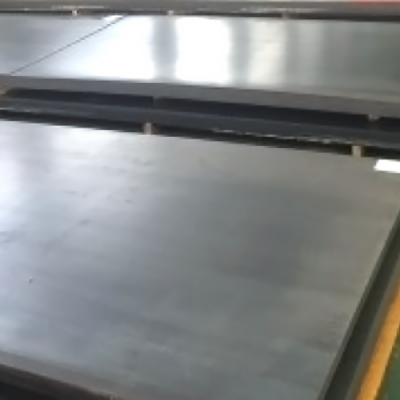

As a trusted supplier of vessel plate A516GR70, we are committed to providing high - quality products that meet and exceed our customers' expectations. Our in - depth knowledge of the material and the latest manufacturing techniques allows us to offer solutions that ensure the long - term reliability and safety of pressure vessels.
If you are in the market for high - quality vessel plate A516GR70 or have any questions about improving its fatigue resistance, we invite you to contact us for procurement discussions. We look forward to working with you to meet your specific needs.
References
- ASME Boiler and Pressure Vessel Code, Section VIII, Division 1.
- ASTM A516/A516M - 17, Standard Specification for Pressure Vessel Plates, Carbon Steel, for Moderate - and Lower - Temperature Service.
- Barsom, J. M., & Rolfe, S. T. (1999). Fracture and Fatigue Control in Structures: Applications of Fracture Mechanics. Prentice Hall.