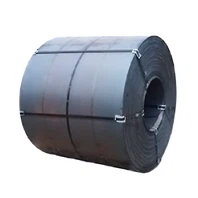
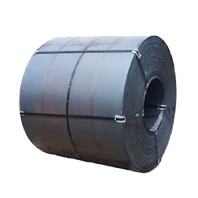
In the dynamic landscape of the steel industry, pipeline plate X46 stands as a crucial component in various infrastructure projects, especially those related to oil and gas transportation. As a supplier of pipeline plate X46, I've witnessed firsthand how production capacity can have a profound impact on its price. In this blog, I'll delve into the intricate relationship between production capacity and the price of pipeline plate X46, exploring the various factors at play and their implications for both suppliers and buyers.
Understanding Pipeline Plate X46
Before we dive into the relationship between production capacity and price, let's first understand what pipeline plate X46 is. Pipeline plate X46 is a high-strength, low-alloy steel plate specifically designed for use in the construction of pipelines. It offers excellent weldability, toughness, and corrosion resistance, making it an ideal choice for transporting oil, gas, and other fluids over long distances. The "X46" designation refers to the minimum yield strength of the steel, which is 46,000 pounds per square inch (psi).
The Role of Production Capacity
Production capacity plays a pivotal role in determining the price of pipeline plate X46. It refers to the maximum amount of pipeline plate X46 that a manufacturer can produce within a given period, usually measured in tons per year. A higher production capacity generally means that a manufacturer can produce more pipeline plate X46 at a lower cost per unit, which can lead to lower prices for buyers.


Economies of Scale
One of the primary reasons why production capacity affects the price of pipeline plate X46 is economies of scale. When a manufacturer increases its production capacity, it can spread its fixed costs, such as the cost of machinery, labor, and overhead, over a larger number of units. This results in a lower cost per unit, which can be passed on to buyers in the form of lower prices.
For example, let's say a manufacturer has a production capacity of 10,000 tons of pipeline plate X46 per year and incurs fixed costs of $1 million per year. If the manufacturer produces 5,000 tons of pipeline plate X46 in a year, the fixed cost per ton would be $200 ($1 million / 5,000 tons). However, if the manufacturer increases its production capacity to 20,000 tons per year and produces 15,000 tons, the fixed cost per ton would decrease to approximately $67 ($1 million / 15,000 tons). This reduction in fixed cost per ton can allow the manufacturer to offer lower prices to buyers.
Supply and Demand
Production capacity also affects the price of pipeline plate X46 through its impact on supply and demand. When the production capacity of pipeline plate X46 is high relative to the demand, there is an oversupply in the market, which can lead to lower prices. On the other hand, when the production capacity is low relative to the demand, there is a shortage in the market, which can drive up prices.
For instance, if there is a sudden increase in demand for pipeline plate X46 due to a large-scale infrastructure project, and the production capacity of manufacturers is unable to keep up with the demand, the price of pipeline plate X46 is likely to increase. Conversely, if there is a slowdown in the construction of pipelines and the demand for pipeline plate X46 decreases, while the production capacity remains high, the price is likely to decline.
Factors Affecting Production Capacity
Several factors can influence the production capacity of pipeline plate X46, which in turn can affect its price.
Technological Advancements
Technological advancements in the steel manufacturing industry can significantly increase the production capacity of pipeline plate X46. New and improved production techniques, such as advanced rolling mills and automated production lines, can allow manufacturers to produce pipeline plate X46 more efficiently and at a higher rate.
For example, the introduction of continuous casting technology has revolutionized the steel manufacturing process, enabling manufacturers to produce steel slabs more quickly and with higher quality. This has led to an increase in the production capacity of pipeline plate X46 and has contributed to lower prices over time.
Raw Material Availability
The availability of raw materials, such as iron ore and coal, is another important factor that can affect the production capacity of pipeline plate X46. If there is a shortage of raw materials, manufacturers may be forced to reduce their production capacity, which can lead to higher prices.
For instance, if there is a disruption in the supply of iron ore due to a natural disaster or political instability in a major iron ore-producing country, the production of pipeline plate X46 may be affected. This can result in a decrease in the supply of pipeline plate X46 in the market and an increase in its price.
Labor and Skills
The availability of skilled labor is also crucial for the production of pipeline plate X46. A shortage of skilled workers can limit the production capacity of manufacturers, as they may not be able to operate the advanced machinery and equipment required for the production process.
In addition, the cost of labor can also affect the production capacity and price of pipeline plate X46. If the cost of labor increases, manufacturers may need to increase the price of pipeline plate X46 to maintain their profit margins.
Implications for Suppliers and Buyers
The relationship between production capacity and the price of pipeline plate X46 has significant implications for both suppliers and buyers.
Suppliers
For suppliers, maintaining an optimal production capacity is essential for remaining competitive in the market. By increasing their production capacity through technological advancements and efficient production processes, suppliers can reduce their costs per unit and offer more competitive prices to buyers.
However, suppliers also need to be cautious about overproducing, as this can lead to an oversupply in the market and a decrease in prices. Therefore, suppliers need to carefully monitor the market demand and adjust their production capacity accordingly.
Buyers
For buyers, understanding the relationship between production capacity and the price of pipeline plate X46 can help them make informed purchasing decisions. When the production capacity is high and the market is oversupplied, buyers may be able to negotiate lower prices with suppliers.
On the other hand, when the production capacity is low and the market is undersupplied, buyers may need to be prepared to pay higher prices or look for alternative suppliers. Buyers can also consider entering into long-term contracts with suppliers to secure a stable supply of pipeline plate X46 at a reasonable price.
Conclusion
In conclusion, the production capacity of pipeline plate X46 has a significant impact on its price. Through economies of scale and its influence on supply and demand, production capacity can either drive prices down or up. Factors such as technological advancements, raw material availability, and labor skills can affect the production capacity of pipeline plate X46, which in turn can affect its price.
As a supplier of LX46 Pipe Line Plate X46 and LX560, I'm committed to maintaining a high production capacity while ensuring the quality of our products. Our Pipe Line Plate Factory is equipped with the latest technology and staffed by skilled workers, allowing us to produce pipeline plate X46 efficiently and at a competitive price.
If you're in the market for pipeline plate X46, I encourage you to reach out to us to discuss your specific requirements. We'd be happy to provide you with a quote and work with you to find the best solution for your project.
References
- Steel Market Dynamics: An Overview of the Global Steel Industry, World Steel Association
- The Economics of Scale in the Steel Manufacturing Industry, Journal of Industrial Economics
- Technological Advancements in Steel Production: A Review, International Journal of Steel Research