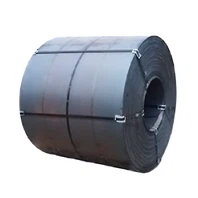
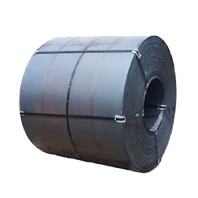
As a supplier of Pipe Line Plate X60, I've witnessed firsthand the crucial role that hardness plays in determining the performance of this essential material. Pipe Line Plate X60 is widely used in the construction of pipelines for transporting oil, gas, and other fluids, and its performance directly impacts the safety and efficiency of these vital infrastructure projects. In this blog post, I'll explore how the hardness of Pipe Line Plate X60 affects its performance, drawing on my experience in the industry and the latest scientific research.


Understanding the Hardness of Pipe Line Plate X60
Hardness is a measure of a material's resistance to indentation, scratching, or wear. In the context of Pipe Line Plate X60, hardness is typically measured using the Brinell, Rockwell, or Vickers hardness tests. These tests involve applying a specific load to the surface of the material using a standardized indenter and measuring the size of the resulting indentation. The hardness value is then calculated based on the load and the size of the indentation.
The hardness of Pipe Line Plate X60 is influenced by several factors, including its chemical composition, heat treatment, and manufacturing process. For example, the addition of alloying elements such as carbon, manganese, and chromium can increase the hardness of the material, while heat treatment processes such as quenching and tempering can further enhance its hardness and strength.
Impact of Hardness on Mechanical Properties
The hardness of Pipe Line Plate X60 has a significant impact on its mechanical properties, including its strength, toughness, and ductility. Generally, as the hardness of the material increases, its strength also increases. This means that harder Pipe Line Plate X60 can withstand higher stresses and pressures without deforming or failing. For pipelines, this is crucial as they are often subjected to high internal pressures and external loads during operation.
However, increasing the hardness of Pipe Line Plate X60 can also reduce its toughness and ductility. Toughness is the ability of a material to absorb energy and deform plastically before fracturing, while ductility is the ability of a material to be stretched or deformed without breaking. A decrease in toughness and ductility can make the material more brittle and prone to cracking, especially under impact or cyclic loading conditions. Therefore, it's essential to strike a balance between hardness and toughness when selecting Pipe Line Plate X60 for a specific application.
Corrosion Resistance
Another important aspect of Pipe Line Plate X60 performance is its corrosion resistance. Pipelines are often exposed to harsh environments, including corrosive fluids, moisture, and soil conditions. The hardness of the material can affect its corrosion resistance in several ways.
Harder Pipe Line Plate X60 may have a more uniform microstructure, which can provide better resistance to corrosion. A uniform microstructure reduces the likelihood of galvanic corrosion, which occurs when two different metals or alloys are in contact in the presence of an electrolyte. Additionally, a harder surface can be more resistant to abrasion and erosion, which can help prevent the formation of corrosion pits and cracks.
However, if the hardness of Pipe Line Plate X60 is too high, it can also lead to increased susceptibility to hydrogen embrittlement. Hydrogen embrittlement is a phenomenon where hydrogen atoms diffuse into the material and cause it to become brittle and prone to cracking. This can be a significant concern in pipelines transporting hydrogen-containing fluids or operating in environments with high hydrogen partial pressures.
Weldability
Weldability is a critical factor in the construction of pipelines using Pipe Line Plate X60. The hardness of the material can have a significant impact on its weldability. Generally, harder materials are more difficult to weld than softer materials. This is because the high hardness can lead to increased residual stresses and cracking in the weld zone.
During the welding process, the heat input can cause the material near the weld to undergo a phase transformation, which can affect its hardness and mechanical properties. If the hardness of the base material is too high, the heat-affected zone (HAZ) may become excessively hard and brittle, increasing the risk of weld cracking. Therefore, it's important to carefully control the welding parameters and use appropriate preheating and post-weld heat treatment to ensure good weldability of Pipe Line Plate X60.
Machinability
In addition to its performance in pipeline construction, the hardness of Pipe Line Plate X60 also affects its machinability. Machinability refers to the ease with which a material can be cut, drilled, or shaped using machining processes. Harder materials generally have lower machinability than softer materials.
When machining Pipe Line Plate X60, the high hardness can cause increased tool wear and reduced cutting speeds. This can result in longer machining times and higher production costs. To improve the machinability of Pipe Line Plate X60, it may be necessary to use specialized cutting tools and machining techniques, such as high-speed machining or the use of coolant.
Selecting the Right Hardness for Your Application
As a supplier of Pipe Line Plate X60, I understand that selecting the right hardness for your specific application is crucial. The hardness requirements will depend on several factors, including the operating conditions of the pipeline, the type of fluid being transported, and the design specifications of the project.
For pipelines operating in high-pressure environments, a higher hardness may be required to ensure the strength and integrity of the pipeline. However, if the pipeline is subjected to impact or cyclic loading, a lower hardness may be preferred to maintain the toughness and ductility of the material. Additionally, if the pipeline is exposed to corrosive environments, the hardness should be selected to provide good corrosion resistance without increasing the risk of hydrogen embrittlement.
At [Company], we offer a wide range of Pipe Line Plate X60 with different hardness levels to meet the diverse needs of our customers. Our technical experts can work with you to understand your specific requirements and recommend the most suitable hardness for your application. We also provide comprehensive testing and certification services to ensure that our Pipe Line Plate X60 meets the highest quality standards.
Conclusion
In conclusion, the hardness of Pipe Line Plate X60 has a profound impact on its performance in various aspects, including mechanical properties, corrosion resistance, weldability, and machinability. As a supplier, it's our responsibility to provide our customers with high-quality Pipe Line Plate X60 that meets their specific requirements. By understanding the relationship between hardness and performance, we can help our customers make informed decisions and ensure the long-term reliability and safety of their pipeline projects.
If you're in the market for Pipe Line Plate X60, I encourage you to [contact us] for more information. Our team of experts is ready to assist you in selecting the right product for your application and providing you with the best possible service. We look forward to working with you on your next pipeline project.
References
- ASME B31.4 - Pipeline Transportation Systems for Liquid Hydrocarbons and Other Liquids
- ASME B31.8 - Gas Transmission and Distribution Piping Systems
- API 5L - Specification for Line Pipe
- ASTM A516 - Standard Specification for Pressure Vessel Plates, Carbon Steel, for Moderate- and Lower-Temperature Service