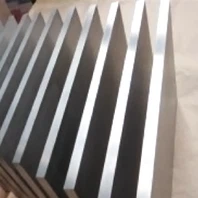
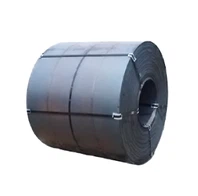
In the realm of industrial manufacturing and construction, heavy plates play a pivotal role. These thick, robust steel sheets are used in a wide range of applications, from building bridges and ships to manufacturing heavy machinery. One of the most critical properties of heavy plates is their yield strength. As a heavy plate supplier, I am often asked about what yield strength is and why it matters. In this blog post, I will delve into the concept of yield strength, its significance, and how it relates to our heavy plate products.
Understanding Yield Strength
Yield strength is a fundamental mechanical property of materials, especially metals like steel. It represents the stress at which a material begins to deform plastically. In simpler terms, when a load is applied to a heavy plate, it first undergoes elastic deformation. This means that the plate will return to its original shape once the load is removed. However, if the load exceeds a certain point, the plate will start to deform permanently, and this point is defined by the yield strength.
To measure the yield strength of a heavy plate, a sample is typically taken from the plate and subjected to a tensile test. During this test, the sample is gradually pulled until it breaks, and the stress and strain are recorded throughout the process. The yield strength is determined as the stress at which the strain begins to increase at a faster rate than the stress, indicating the onset of plastic deformation.
Why Yield Strength Matters
The yield strength of heavy plates is crucial for several reasons. Firstly, it determines the maximum load that a plate can withstand without permanent deformation. In structural applications, such as building construction and bridge engineering, this is essential for ensuring the safety and integrity of the structure. If a heavy plate with insufficient yield strength is used, it may deform under normal operating loads, leading to structural failures and potential disasters.
Secondly, yield strength affects the design and cost of a project. Engineers can use the yield strength of heavy plates to optimize the design of a structure, ensuring that it is both safe and cost - effective. By selecting plates with the appropriate yield strength, they can reduce the amount of material required, which in turn lowers the overall cost of the project.
Finally, yield strength is an important factor in determining the formability of heavy plates. Plates with higher yield strength are generally more difficult to form, as they require more force to deform. However, they also offer better resistance to wear and tear, making them suitable for applications where durability is a key concern.
Yield Strength in Our Heavy Plate Products
As a heavy plate supplier, we offer a wide range of products with different yield strengths to meet the diverse needs of our customers. Our High Strength Plate is designed for applications that require high - performance materials. These plates have a significantly higher yield strength compared to standard steel plates, making them ideal for use in demanding environments such as offshore platforms and heavy - duty machinery.
One of our popular products is the A572GR55 Heavy Plate. This plate is made from low - alloy steel and has a minimum yield strength of 55,000 psi (379 MPa). It offers excellent strength and toughness, making it suitable for a variety of structural applications, including building frames and bridges.
Another product in our portfolio is the A572GR50 Carbon Steel Plate. With a minimum yield strength of 50,000 psi (345 MPa), this plate is a more cost - effective option for applications where high strength is required but not to the same extent as in more demanding projects. It is commonly used in general construction and machinery manufacturing.
Factors Affecting Yield Strength
Several factors can affect the yield strength of heavy plates. One of the most significant factors is the chemical composition of the steel. Alloying elements such as manganese, nickel, and chromium can increase the yield strength of steel by forming solid solutions and precipitates that impede the movement of dislocations within the crystal lattice.
The manufacturing process also plays a crucial role in determining the yield strength. Processes such as hot rolling and heat treatment can refine the grain structure of the steel, which in turn increases its strength. For example, quenching and tempering are heat - treatment processes that can significantly improve the yield strength and toughness of heavy plates.
The thickness of the plate is another important factor. Generally, thicker plates have lower yield strengths compared to thinner plates. This is because thicker plates are more likely to have internal defects and inhomogeneities, which can reduce their mechanical properties.

Testing and Quality Control
At our company, we understand the importance of ensuring the quality and consistency of our heavy plate products. That's why we have a rigorous testing and quality control process in place. Every batch of heavy plates undergoes a series of tests, including tensile tests, hardness tests, and ultrasonic testing, to ensure that they meet the required yield strength and other mechanical properties.
Our testing facilities are equipped with state - of - the - art equipment, and our technicians are highly trained and experienced. We also adhere to international standards and specifications, such as ASTM and EN, to ensure that our products are of the highest quality.
Conclusion
In conclusion, yield strength is a critical property of heavy plates that determines their performance and suitability for various applications. As a heavy plate supplier, we are committed to providing our customers with high - quality products that meet their specific requirements. Whether you need plates for a large - scale construction project or a specialized manufacturing application, we have the expertise and the products to meet your needs.
If you are interested in learning more about our heavy plate products or have any questions about yield strength, please feel free to contact us. Our team of experts is always ready to assist you in selecting the right plates for your project and to provide you with all the necessary technical support. We look forward to the opportunity to work with you and contribute to the success of your project.
References
- Callister, W. D., & Rethwisch, D. G. (2018). Materials Science and Engineering: An Introduction. Wiley.
- ASM Handbook Committee. (2008). ASM Handbook, Volume 1: Properties and Selection: Irons, Steels, and High - Performance Alloys. ASM International.