

Products

A572GR55 Heavy Plate
Why Choose A572GR55 Heavy Plate Manufactuer?
Qinhuangdao Aotong was founded in 2004. Our main products include ASME SA516, heavy plates, JIS G3106 SM490, A516 Gr 70 plates, low alloy steel plates, vessel plates A516Gr70, abrasion-resistant wear plates, and carbon steel plate A283GRC, among others. With annual sales exceeding 300 thousand tons, we serve numerous domestic end-users and large and medium-sized projects. Additionally, our products are exported to Europe, South America, and Southeast Asia.
Advantages of China A572GR55 Heavy Plate Supplier:
Competitive Price
We have a professional purchasing team and costing team,trying to reduce costs and profits,and provide you with a good price.
One-stop Solution
Make meticulous production arrangements according to the order schedule; rapid production capacity, one-stop service at home.
Quality customer service
Our dedicated team is always ready to answer your questions, provide you with detailed information about our products and guide you in your choice. We understand that every customer is unique.
Online order tracking
The technical team can quickly solve various problems in the use of steel and provide thoughtful technical support.One-to-one follow-up service experience, to achieve regular return visits to track product usage.
What is A572GR55 Heavy Plate
A572GR55 is a type of low alloy steel plate. Low alloy steel is a type of steel that contains a limited amount of one or more alloying elements, such as chromium, nickel, molybdenum, or vanadium, in addition to carbon. The addition of these alloying elements to the steel improves its strength, toughness, and corrosion resistance.The A572GR55 low alloy steel plate is primarily used in the construction of bridges, buildings, and other structures that require high strength and durability. This type of steel plate has a minimum yield strength of 380 MPa (55 ksi) and a minimum tensile strength of 485 MPa (70 ksi). It is also characterized by its ability to resist atmospheric corrosion and provide excellent weldability.


Benefits of A572GR55 Heavy Plate
- High Strength: Low alloy steel plate A572GR55 offers high strength and durability, making it ideal for structural applications.
- Improved Mechanical Properties: The plate is processed using techniques that improve its mechanical properties, such as toughness, ductility, and impact resistance.
- Good Weldability: The low carbon content of the A572GR55 plate ensures good weldability and workability, making it easy to fabricate.
- Corrosion Resistance: The plate's corrosion-resistant properties make it suitable for use in harsh environments, including offshore and marine applications.
- Cost-Effective: Low alloy steel plate A572GR55 is relatively cheap compared to other high-performance materials, making it an economical choice for many applications.
- Wide Availability: The plate is widely available and can be easily sourced from a variety of suppliers, making it a readily available material for a range of applications.
- Versatility: Low alloy steel plate A572GR55 can be used in a wide range of applications, from structural and engineering projects to construction, manufacturing, and equipment fabrication.
What are the Applications of A572GR55
Structural applications
A572GR55 low alloy steel plate is widely used in the construction of buildings, bridges, and other structures due to its high strength and durability.
Pressure vessels
The steel plate is also used in the fabrication of pressure vessels for industrial applications.
Heavy equipment and machinery
Low alloy steel plates are used in the manufacturing of heavy equipment and machinery components such as bulldozers, excavators, and cranes.
Energy industry
The energy industry uses A572GR55 low alloy steel plate for various applications such as pipelines, oil rigs, and offshore platforms.
Railway industry
The railway industry uses the steel plate for the manufacturing of railway tracks and other components.
Automobile industry
Low alloy steel plates are used for the manufacturing of automobile components such as chassis, suspension systems, and steering components.
Marine industry
The marine industry uses A572GR55 low alloy steel plate for building ships, boats, and other marine structures because of its resistance to corrosion and high strength.
Types of A572GR55
A572GR55 hot-rolled steel plate
This is a high-strength, low-alloy structural steel plate that is widely used in construction and engineering applications. It has excellent mechanical properties, including high yield strength and good toughness.
A572GR55 cold-rolled steel plate
This plate is a low-carbon, high-strength steel plate that is often used in structural applications. It is commonly used for building construction, bridges, and other infrastructure projects.
A572GR55 high-strength steel plate
This plate is designed for use in high-stress situations, such as in heavy construction equipment or heavy machinery. It has a high yield strength and excellent impact resistance.
A572GR55 structural steel plate
This steel plate is used in a variety of applications, including building construction, transportation, and mining. It has a high strength-to-weight ratio and excellent corrosion resistance.
A572GR55 pressure vessel steel plate
This is a low-alloy, high-strength steel plate that is designed for use in pressure vessels and boilers. It has good weldability and toughness and can withstand high temperatures and pressure levels.
The low alloy steel plate A572GR55 carbon steel include its thermal conductivity, specific heat capacity, and coefficient of thermal expansion. The thermal conductivity of A572 carbon steel is typically around 45 W/m·K, indicating its ability to conduct heat efficiently. The specific heat capacity, which measures the amount of heat energy required to raise the temperature of a given mass, is 420 J/kg·K. The coefficient of thermal expansion of A572 carbon steel is approximately 10.8–12.5 µm/m·K, indicating that it expands or contracts with temperature changes. These thermal properties are important considerations for applications involving heat transfer and thermal stability.
A572GR55 Features
High strength
A572GR55 steel plate has a minimum yield strength of 380MPa and a minimum tensile strength of 485MPa, making it ideal for use in high-stress applications.
Good weldability
The low carbon content and alloying elements in A572GR55 steel plate make it easy to weld and form.
Excellent toughness
A572GR55 steel plate can withstand high impact and fatigue loads, making it suitable for use in tough environments.
Good corrosion resistance
A572GR55 steel plate has good resistance to corrosion due to its alloying elements, making it suitable for use in harsh environments such as marine and offshore applications.
Cost-effective
Compared to other high-strength steels, A572GR55 steel plate has a lower cost, making it a cost-effective solution for many applications.
Maintenance Tips for A572GR55
Regular Cleaning
One of the best ways to maintain the quality, functionality, and longevity of A572GR55 alloy steel plates is to clean them regularly. Make sure to get rid of dirt, dust, and grime that may have accumulated on the surface. Use a soft cloth or brush and mild detergent to clean the plates. Avoid using abrasive cleaners or anything that could scratch the surface.
Keep the Plates Dry
Moisture is one of the biggest enemies of alloy steel plates. So, make sure to keep them dry always. After cleaning, make sure to dry the plates completely before storing or using them. Additionally, avoid exposing the plates to water, moisture, or humid conditions.
Store Carefully
If you need to store A572GR55 alloy steel plates, store them in a dry and cool place, free from direct sunlight. Avoid stacking them on top of each other, as this could lead to deformation or damage. Use suitable steel racks or shelves to store the plates.
Avoid Impact
Alloy steel plates are usually resistant to damage from impact and heavy loads. Nevertheless, it's good to avoid dropping or impacting the plates, as this could lead to deformation or even cracking. Use recommended lifting tools and safety standards when handling the plates.
Periodic Inspections
In addition to regular cleaning and maintenance, it's important to conduct periodic inspections on your A572GR55 alloy steel plates. This will help you to identify any defects or issues that require attention. Schedule regular inspections with a certified inspector or through your maintenance team.
Lubrication
Proper lubrication of the steel plates is also important as it helps in lowering the friction between the plates. Ensure to use the right lubricant as recommended in the manual provided by the manufacturer.
Low alloy steels contain a few percent (typically between 1 and 7%) of elements such as Cr, Ni, Mo and V. This category includes chromium steels (containing up to 5% Cr and 1% Mo) and nickel steels (containing up to 5% Ni).Low alloy steels are generally weldable (see What is weldability?), but it is important to know the service, joint configuration and the subgroup of the material type. Low alloy steels can be welded by most processes, as long as adequate precautions are taken to avoid defects. It is important to know the composition of the material, either from a mill sheet or a dedicated chemical analysis, as composition influences weldability significantly.
With increasing carbon or alloy content, low alloy steels generally become more difficult to weld as the heat affected zone hardness increases. The need for postweld heat treatment (PWHT) of these joints also increases. The composition is also important in identifying high, but allowable, levels of residual elements such as sulphur or phosphorus, which can lead to problems with liquation cracking or temper embrittlement during PWHT.
To avoid fabrication hydrogen cracking, it is important to use low hydrogen processes and consumables, particularly as increasing the carbon and alloy content, and increasing the section thickness, increases the risk of hydrogen cracking. A post-heattreatment may be required to reduce the levels of hydrogen in the weld region.
What Are The Mechanical Properties Of A572Gr55 Low Alloy Steel Plate?
A572GR55 low alloy steel plate are generally as follows:
Yield Strength (min): 260 MPa (38 ksi)
Tensile Strength (min): 340 MPa (49 ksi)
Elongation (min): 34%
These mechanical properties are measured using standard test methods and may vary slightly depending on the specific manufacturing process and heat treatment of the steel. CR260LA steel has a high strength-to-weight ratio, good formability and improved fatigue resistance compared to conventional carbon steels. The steel's dual-phase microstructure allows it to be easily formed into complex shapes without cracking or breaking, while the low carbon content and alloying elements help improve its weldability and toughness. These properties make CR260LA steel a popular choice in the automotive, construction and manufacturing industries where high strength and good formability are critical.

A572GR55 Heavy Plate Factory Product Recommendations
ASME SA516 steel is available in grades 55, 60, 65, and 70, and is also offered in the normalized condition for improved notch toughness. The steel is made from carbon-manganese steels and produced to pressure vessel quality (PVQ) standards.
Heavy plate is steel sheet material that is at least 3 inches thick, up to 4 meters wide, and up to 250 millimeters thick. It's manufactured by reverse thermomechanical rolling slabs. Heavy plate is made from a variety of grades, including hot-rolled carbon steel plate and high-strength low-alloy steel plate.
JISG3106 SM490A Carbon and Low-alloy High-strength Steel Plate Application. JISG3106 SM490A Steel Plate are used in Construction of Bridges, Highway Construction and Other Engineering construction.
Plate A516 Gr 70 is a carbon steel pressure vessel plate that can withstand moderate and low temperatures. It's the most common grade of A516 steel plate and is used in the oil, gas, and petrochemical industries for boilers and pressure vessels. Plate A516 Gr 70 is also used in industrial boilers and other applications that require high notch toughness and moderate to low temperatures.
Vessel Plate A516gr70, also known as A516-70, is a carbon steel plate used in pressure vessels for low to moderate temperatures. Vessel Plate A516gr70 is the most popular grade of steel plate in the industry, and is used in the chemical, oil and gas, and petrochemical industries.
Abrasion Resistant Wear Plates:
Abrasion resistant wear plates, also known as wear-resistant steel plates (AR plates), are made from steel slabs that contain different alloys. The carbon in the steel makes it more durable, while the other metals make it more formable and weather resistant. The carbon increases the steel's hardness, but the toughness is reduced making it more susceptible to cracking.
Carbon Steel Plate A283grc is a carbon steel plate with low to intermediate tensile strength that's used for general structural purposes. Carbon Steel Plate A283grc has a similar chemical composition to other grades, but has different tensile strength, yield strength, and specific applications.
Our Factory
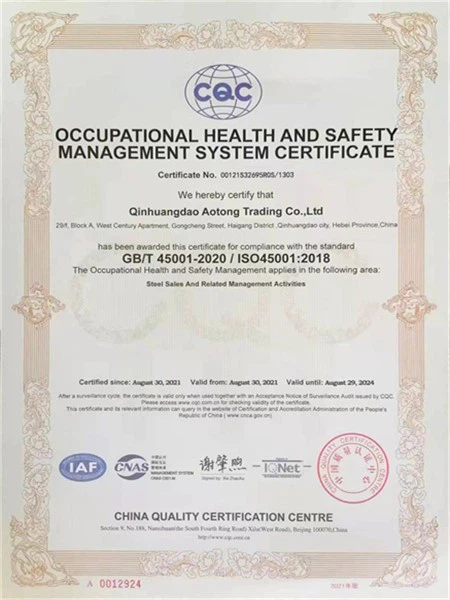
Qinhuangdao Aotong was founded in 2004,it is a geoup management enterprises with the collection of trade ,steel further processing and warehousing logistics .The three major business sector include the Aotong metal center and the Aotong logistics center .The factory covers an area of 202000 square meters.The company has established Chenggang Wuyang and other major steel mills and traders across the country.The main products include medium and heavy steel plates,hot rolled coils, cold rolled pickled plates ,profiles building materials,etc.,with annual sales of more than 300 thousand tons.In addition to serving many domestic end-users and large and medium-sized projects,the products are exported to Europe,South America and Southeast Asia.


Our Factory


A572GR55 Heavy Plate Manufacturers Questions Guide:
Q: What is a low alloy steel plate?
Q: What is A572GR55?
Q: What are the properties of A572GR55 steel?
Q: What are the applications of A572GR55 steel?
Q: What are the differences between A572GR55 and other low alloy steel plates?
Q: What are the advantages of using low alloy steel plate?
Q: What are some common applications for low alloy steel plate?
Q: What are some examples of low alloy steel plate grades?
Q: How is low alloy steel plate manufactured?
Q: What are the applications of low alloy steel plate?
Q: What is the difference between low alloy steel plate and high alloy steel plate?
Q: What is the welding process for low alloy steel plate?
Q: What is the main advantage of using stainless steel instead of mild steel?
Q: Is low alloy steel the same as stainless steel?
Q: Is low alloy steel rust resistant?
Q: What is low alloy steel good for?
Q: Which is better stainless steel or alloy steel?
Q: What is the difference between alloy steel and low alloy steel?
Q: Is mild steel the same as low-alloy steel?
Q: Is alloy steel expensive?
Q: What are the advantages of Abrasion Resistant Wear Plates?
Q: Plate A516 G70 is suitable for which industries are suitable for?
Q: What is the use of Vessel Plate A516GR70?
Q: What are the uses of Abrasion Resistant Wear Plates?
Q: What is the chemical nature of Carbon Steel Plate A283GRC?
Q: What is the use of Carbon Steel Plate A283GRC?
China Aotong - Your professional A572GR55 Heavy Plate Supplier
We're well-known as one of the leading Alloy Steel Plate manufacturers and suppliers in China.
Our hot products are: Asme Sa516, Heavy Plate, Jisg3106 Sm490, Plate A516 Gr 70, Low Alloy Steel Plate, Vessel Plate A516gr70, Abrasion Resistant Wear Plates, Carbon Steel Plate A283grc.
If you're going to buy custom made Alloy Steel Plate at competitive price, welcome to get more company information from our factory.
Hot Tags: A572GR55 Heavy Plate, China A572GR55 Heavy Plate manufacturers, suppliers, factory, steel plate for shipbuilding, steel plate for storage tanks, durable steel plate, steel plate for pressure vessels, steel plate for machinery, round steel plate


