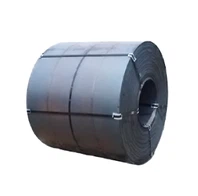
Hey there! As a supplier of Plate A516 Gr 70, I often get asked about how this plate performs in seawater. So, I thought I'd share some insights on this topic.
First off, let's talk a bit about Plate A516 Gr 70. It's a popular carbon steel plate that's mainly used in the fabrication of pressure vessels operating at moderate and lower temperatures. This plate has good notch toughness and is known for its excellent weldability and formability. But when it comes to seawater, things get a bit more complicated.
Seawater is a harsh environment. It's full of salts, mainly sodium chloride, along with other dissolved minerals and various microorganisms. These elements can have a significant impact on the performance of metals, including Plate A516 Gr 70.
One of the most significant issues with exposing Plate A516 Gr 70 to seawater is corrosion. Corrosion is a natural process that occurs when a metal reacts with its environment. In the case of seawater, the high salt content accelerates this process. The chloride ions in seawater can break down the protective oxide layer that forms on the surface of the steel, leaving it vulnerable to further corrosion.


When Plate A516 Gr 70 is in seawater, it can experience different types of corrosion. One common type is uniform corrosion, where the entire surface of the plate gradually wears away at a relatively constant rate. This can lead to a reduction in the thickness of the plate over time, which can compromise its structural integrity.
Another type of corrosion that can occur is pitting corrosion. Pitting is a localized form of corrosion that results in the formation of small holes or pits on the surface of the steel. These pits can be quite deep and can cause rapid failure of the plate, especially if they penetrate through the entire thickness of the material.
In addition to corrosion, Plate A516 Gr 70 in seawater may also face issues related to biofouling. Biofouling is the accumulation of microorganisms, plants, algae, or animals on wetted surfaces. When marine organisms attach themselves to the surface of the plate, they can create a layer that traps moisture and debris, further promoting corrosion. Moreover, some biofouling organisms can produce chemicals that are corrosive to the steel.
However, it's not all bad news. There are ways to improve the performance of Plate A516 Gr 70 in seawater. One common method is to apply a protective coating. Coatings can act as a barrier between the steel and the seawater, preventing direct contact and reducing the risk of corrosion. There are various types of coatings available, such as epoxy coatings, which are known for their excellent corrosion resistance.
Cathodic protection is another effective technique. This involves connecting the Plate A516 Gr 70 to a more active metal, such as zinc or magnesium. The more active metal corrodes preferentially, sacrificing itself to protect the steel. This method can significantly extend the lifespan of the plate in seawater.
Now, let's compare Plate A516 Gr 70 with some other related products. You might also be interested in A572GR55 Heavy Plate. A572GR55 is a low - alloy high - strength structural steel. It has different chemical and mechanical properties compared to Plate A516 Gr 70. In seawater, A572GR55 may also face corrosion issues, but its alloying elements can provide some additional resistance in certain conditions.
Another option is A572GR60. A572GR60 is also a low - alloy steel with higher strength than A572GR55. Similar to Plate A516 Gr 70, it needs proper protection in seawater to prevent corrosion.
And then there's SM520C. SM520C is a Japanese standard low - alloy high - strength steel. It has good weldability and toughness, but like the others, it will require protection measures when used in seawater.
So, if you're considering using Plate A516 Gr 70 in a seawater application, it's crucial to take into account the potential corrosion and biofouling issues and implement appropriate protection methods. Whether you're building a seawater - based pressure vessel, a marine structure, or something else, we can provide you with high - quality Plate A516 Gr 70.
If you're interested in purchasing Plate A516 Gr 70 or want to learn more about how it can be used in your specific seawater project, don't hesitate to reach out. We're here to help you make the best choice for your needs.
References
- ASM Handbook, Volume 13A: Corrosion: Fundamentals, Testing, and Protection. ASM International.
- Corrosion of Metals in Seawater. National Association of Corrosion Engineers (NACE).