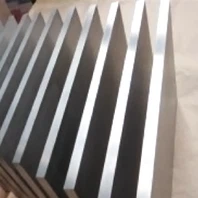
Hey there! As a supplier of ASTM A514 steel, I often get asked about the differences between ASTM A514 Grade B and other grades. So, I thought I'd write this blog to break it all down for you.
First off, let's talk a bit about what ASTM A514 is. ASTM A514 is a standard specification for high-yield-strength, quenched, and tempered alloy steel plates used in applications where high strength is required. These plates are commonly used in the construction of bridges, buildings, and heavy machinery.
ASTM A514 Grade B: The Basics
ASTM A514 Grade B is a specific grade within the ASTM A514 standard. It's known for its excellent strength and toughness. The minimum yield strength of ASTM A514 Grade B is 100 ksi (690 MPa), which means it can withstand a significant amount of stress before it starts to deform. This high yield strength makes it a popular choice for applications where heavy loads are involved.


One of the key features of ASTM A514 Grade B is its good weldability. Welding is a crucial process in many construction and manufacturing applications, and having a steel grade that can be easily welded without sacrificing its strength is a big plus. This grade also has good impact resistance, which means it can handle sudden shocks and vibrations without cracking or breaking.
Comparing ASTM A514 Grade B with Other ASTM A514 Grades
There are several other grades within the ASTM A514 standard, such as Grade F, Grade H, and Grade Q. Each grade has its own unique properties and is suitable for different applications.
- ASTM A514 Grade F: This grade has a similar yield strength to Grade B, but it has better notch toughness. Notch toughness is important in applications where the steel may be subjected to stress concentrations, such as in the corners of a structure. So, if you're working on a project where notch toughness is a concern, Grade F might be a better choice.
- ASTM A514 Grade H: Grade H has a higher yield strength than Grade B, with a minimum yield strength of 110 ksi (760 MPa). This makes it suitable for applications where even higher strength is required. However, the higher strength comes at a cost. Grade H may have slightly lower weldability compared to Grade B, so you need to be more careful when welding it.
- ASTM A514 Grade Q: This grade is known for its excellent corrosion resistance in addition to its high strength. If your project is in an environment where corrosion is a concern, such as near the ocean or in a chemical plant, Grade Q might be the way to go.
Comparing ASTM A514 Grade B with Non - ASTM A514 High - Strength Steels
Now, let's compare ASTM A514 Grade B with some non - ASTM A514 high - strength steels like S690QL1, S890QL1, and S550QL1.
- S690QL1: This steel has a similar yield strength to ASTM A514 Grade B, around 690 MPa. However, S690QL1 is part of the European standard EN 10025 - 6. It has different chemical composition and mechanical properties compared to ASTM A514 Grade B. S690QL1 is often used in the European market and has a reputation for high quality and reliability.
- S890QL1: This is a high - strength steel with a very high yield strength, up to 890 MPa. It's much stronger than ASTM A514 Grade B. S890QL1 is used in applications where extremely high strength is required, such as in some heavy - duty mining equipment. But again, like ASTM A514 Grade H, the high strength may come with some challenges in terms of weldability.
- S550QL1: With a yield strength of around 550 MPa, S550QL1 is slightly less strong than ASTM A514 Grade B. It's a good choice for applications where a balance between strength and cost is needed. S550QL1 is also known for its good formability, which means it can be easily shaped into different forms without cracking.
Applications of ASTM A514 Grade B
ASTM A514 Grade B is used in a wide range of applications. Some of the common ones include:
- Bridge Construction: The high strength and good weldability of ASTM A514 Grade B make it ideal for building bridges. It can handle the heavy loads of traffic and the forces exerted by wind and earthquakes.
- Heavy Machinery: In the manufacturing of heavy machinery such as cranes, bulldozers, and excavators, ASTM A514 Grade B is often used. Its high strength allows the machinery to be more durable and reliable.
- Building Construction: For high - rise buildings and other large - scale construction projects, ASTM A514 Grade B can be used in structural components to provide the necessary strength and support.
Why Choose Me as Your ASTM A514 Supplier
As a supplier of ASTM A514 steel, I've got a lot to offer. I have a wide range of ASTM A514 Grade B and other grades in stock, so I can meet your immediate needs. I work with reliable manufacturers who follow strict quality control processes to ensure that the steel I supply meets the highest standards.
I also offer competitive prices. I understand that cost is an important factor in any project, and I strive to provide the best value for your money. And if you have any questions or need technical advice, I'm here to help. Whether it's choosing the right grade for your project or understanding the welding requirements, I've got the knowledge and experience to assist you.
Let's Talk!
If you're in the market for ASTM A514 steel, I'd love to hear from you. Whether you're working on a small - scale project or a large - scale industrial development, I can provide you with the right steel at the right price. Don't hesitate to reach out and start a conversation about your procurement needs.
References
- ASTM International. ASTM A514/A514M - 21 Standard Specification for High - Yield - Strength, Quenched and Tempered Alloy Steel Plate, Suitable for Welding.
- European Committee for Standardization. EN 10025 - 6:2019 Hot - rolled products of high yield strength steels. Technical delivery conditions for quenched and tempered steels.