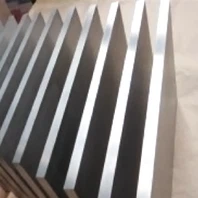
Hey there! As a supplier of high strength plates, I often get asked about how to test the bending performance of these bad boys. High strength plates, like the S960QL, S550QL Astm A514 Steel Plate, and S690QL, are used in a bunch of industries, from construction to heavy machinery. And knowing how well they bend is super important for making sure they're up to the job.
Why Test Bending Performance?
First off, let's talk about why we even bother testing the bending performance. High strength plates are used in applications where they need to withstand a lot of stress and deformation. For example, in building structures, these plates might be bent to form columns or beams. If they can't bend properly, they could crack or break under load, which is a huge safety risk.
Testing the bending performance helps us understand how the plate will behave when it's bent in real - world situations. It gives us an idea of its ductility, which is the ability of the material to deform without breaking. A plate with good ductility can be bent into complex shapes without cracking, making it more versatile for different applications.
Preparation for Bending Tests
Before we start testing, we need to do some prep work. First, we select the right sample. The sample should be representative of the whole batch of high strength plates. We usually take a sample from different parts of the plate to make sure we're getting an accurate picture of its properties.
The size and shape of the sample also matter. For most bending tests, we use a rectangular sample with specific dimensions. The thickness of the sample should be the same as the actual plate we're going to use in the application.
We also need to make sure the sample is clean and free of any surface defects. A scratch or a dent on the surface can affect the bending results, so we take extra care to prepare the sample properly.
Bending Test Methods
There are a few different methods for testing the bending performance of high strength plates. One of the most common methods is the three - point bending test. In this test, the sample is placed on two supports, and a load is applied at the center of the sample. As the load increases, the sample starts to bend.
We keep increasing the load until the sample either reaches a certain angle of bend or until it breaks. The angle of bend is measured using a protractor or a specialized measuring device. We record the load at different angles of bend to create a load - deflection curve. This curve gives us a lot of information about the plate's bending behavior.
Another method is the four - point bending test. In this test, the sample is supported at two points and loaded at two other points. This method is more suitable for testing larger samples or for simulating real - world bending conditions where the load is distributed over a wider area.

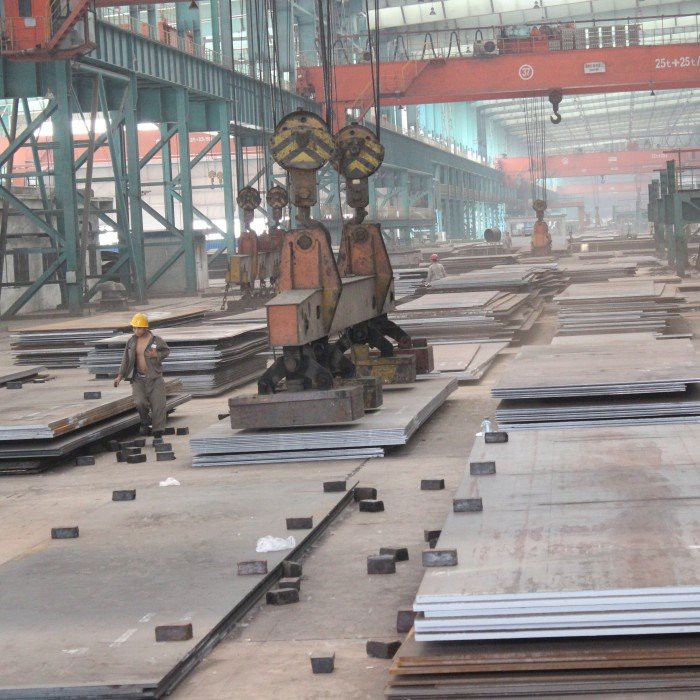
Interpreting the Results
Once we've completed the bending test, it's time to interpret the results. The first thing we look at is whether the sample cracked or broke during the test. If it did, it means the plate might not have enough ductility for certain applications.
We also look at the load - deflection curve. A steep curve indicates that the plate is stiff and resists bending, while a flatter curve means the plate is more ductile and can deform more easily.
The maximum load the sample can withstand before it breaks is another important parameter. This value gives us an idea of the plate's strength. A higher maximum load means the plate can handle more stress during bending.
Factors Affecting Bending Performance
There are several factors that can affect the bending performance of high strength plates. The chemical composition of the plate is a big one. Different alloying elements can change the plate's strength, ductility, and other properties. For example, adding more carbon to the steel can increase its strength but decrease its ductility.
The heat treatment process also plays a crucial role. Heat treatment can change the microstructure of the plate, which in turn affects its mechanical properties. A well - heat - treated plate will have better bending performance than one that hasn't been treated properly.
The thickness of the plate is another factor. Thicker plates are generally more difficult to bend than thinner ones. This is because the stress is distributed over a larger cross - sectional area, making it harder for the plate to deform.
Quality Control and Assurance
As a high strength plate supplier, quality control and assurance are super important to us. We perform bending tests on a regular basis to make sure our plates meet the required standards.
We also keep records of all the test results. This helps us track the quality of our products over time and identify any trends or issues. If we notice a problem with the bending performance of a particular batch of plates, we can take corrective actions, such as adjusting the manufacturing process or rejecting the batch.
Applications and Real - World Use
High strength plates with good bending performance have a wide range of applications. In the construction industry, they're used to build high - rise buildings, bridges, and industrial structures. The ability to bend these plates into different shapes allows architects and engineers to create unique and efficient designs.
In the automotive industry, high strength plates are used to make parts like chassis and frames. These parts need to be strong and lightweight, and good bending performance allows for the creation of complex shapes that can improve the vehicle's performance and safety.
Conclusion
Testing the bending performance of high strength plates is a crucial step in ensuring their quality and suitability for different applications. By following proper testing methods and interpreting the results correctly, we can make sure our plates are safe and reliable.
If you're in the market for high strength plates like S960QL, S550QL Astm A514 Steel Plate, or S690QL, and you want to know more about their bending performance, don't hesitate to get in touch. We're here to help you find the right plate for your needs and can provide you with all the necessary test data and technical support. Let's start a conversation about your procurement requirements and see how we can work together to get you the best high strength plates on the market.
References
- ASTM Standards on Metallic Materials Testing
- "Metallurgy of Steel" by George E. Dieter
- Journal articles on high strength steel plate properties and testing