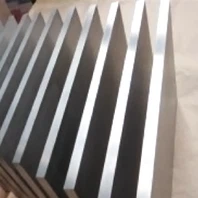
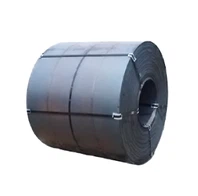
As a supplier of Pipe Line Plate X52, ensuring the quality of our products is of utmost importance. One critical aspect of quality control is the inspection of internal defects in the Pipe Line Plate X52. In this blog, I will share some effective methods for inspecting these internal defects, which can help us and our customers maintain high - quality pipeline systems.
Understanding Pipe Line Plate X52
Before diving into the inspection methods, it's essential to understand what Pipe Line Plate X52 is. Pipe Line Plate X52 is a high - strength, low - alloy steel plate commonly used in the construction of oil and gas pipelines. It offers excellent weldability, toughness, and corrosion resistance. The integrity of this plate is crucial for the long - term performance and safety of the pipeline.
Common Internal Defects in Pipe Line Plate X52
There are several types of internal defects that can occur in Pipe Line Plate X52. These include cracks, porosity, inclusions, and laminations. Cracks can propagate under stress, leading to pipeline failure. Porosity may reduce the strength of the plate, while inclusions and laminations can affect the plate's homogeneity and mechanical properties.
Inspection Methods
Ultrasonic Testing (UT)
Ultrasonic testing is one of the most widely used methods for inspecting internal defects in Pipe Line Plate X52. It works by sending high - frequency sound waves into the plate. When these waves encounter a defect, such as a crack or inclusion, they are reflected back. The reflected waves are then detected and analyzed to determine the size, location, and type of the defect.
The advantage of ultrasonic testing is its high sensitivity. It can detect very small defects that may not be visible to the naked eye. Additionally, it is a non - destructive testing method, which means the plate can still be used after testing. However, ultrasonic testing requires skilled operators and proper calibration of the equipment to ensure accurate results.
For example, in a recent project, we used ultrasonic testing on a batch of Pipe Line Plate X52. The test revealed several small inclusions that were not apparent during visual inspection. By detecting these inclusions early, we were able to take corrective actions and prevent potential quality issues in the final pipeline product.
Radiographic Testing (RT)
Radiographic testing involves using X - rays or gamma rays to penetrate the Pipe Line Plate X52. When the rays pass through the plate, they are absorbed differently depending on the density of the material. Defects, such as cracks or porosity, have a different density compared to the surrounding material, so they appear as dark or light areas on the radiographic film or digital detector.
Radiographic testing provides a clear image of the internal structure of the plate. It can accurately show the shape and size of the defects. However, it has some limitations. It is more expensive than ultrasonic testing and requires special safety precautions due to the use of radiation. Also, it may not be as effective in detecting certain types of defects, such as thin laminations.
In our experience, radiographic testing is often used as a complementary method to ultrasonic testing. For instance, when ultrasonic testing indicates a potential defect but the exact nature is unclear, radiographic testing can be used to provide more detailed information.
Magnetic Particle Testing (MT)
Magnetic particle testing is suitable for detecting surface and near - surface defects in ferromagnetic materials like Pipe Line Plate X52. It works by magnetizing the plate and then applying magnetic particles. The particles are attracted to areas where there is a magnetic field leakage, which occurs at the location of a defect.
This method is relatively simple and cost - effective. It can quickly identify surface cracks and other defects. However, it is limited to surface and near - surface inspection and cannot detect internal defects that are deeper in the plate.
We often use magnetic particle testing as a preliminary inspection method before more in - depth testing. For example, when receiving a new batch of Pipe Line Plate X52, we first perform magnetic particle testing to check for obvious surface defects.
Eddy Current Testing (ECT)
Eddy current testing is based on the principle of electromagnetic induction. When an alternating current is passed through a coil near the surface of the Pipe Line Plate X52, it creates eddy currents in the plate. Any change in the electrical conductivity or magnetic permeability of the plate, such as due to a defect, will cause a change in the eddy currents. This change can be detected and analyzed.
Eddy current testing is particularly useful for detecting surface and near - surface defects in non - ferromagnetic materials and can also be used for thin - walled Pipe Line Plate X52. It is a fast and non - contact testing method. However, it has limited penetration depth and is mainly sensitive to surface - related defects.
Importance of Regular Inspection
Regular inspection of Pipe Line Plate X52 is crucial for maintaining product quality. By detecting internal defects early, we can take corrective actions such as re - working the plate, rejecting defective pieces, or adjusting the manufacturing process. This not only helps to prevent pipeline failures but also reduces costs associated with product recalls and repairs.
Related Products
In addition to Pipe Line Plate X52, we also offer other related products, such as LX46 Pipe Line Plate X46 and LX56 Pipe Line Plate X60. These plates have different properties and are suitable for various pipeline applications.
Contact for Purchase and Discussion
If you are interested in our Pipe Line Plate X52 or other related products, we welcome you to contact us for further discussion. We have a team of experts who can provide you with detailed product information and technical support. Whether you need help with product selection, inspection methods, or any other aspect of pipeline plate applications, we are here to assist you.


Conclusion
Inspecting the internal defects of Pipe Line Plate X52 is a complex but essential process. By using a combination of inspection methods such as ultrasonic testing, radiographic testing, magnetic particle testing, and eddy current testing, we can ensure the quality and integrity of the plate. As a supplier, we are committed to providing high - quality products and excellent service to our customers. We look forward to working with you on your pipeline projects.
References
- ASME Boiler and Pressure Vessel Code, Section V: Nondestructive Examination
- ASTM Standards for Testing and Inspection of Steel Plates
- ISO Standards related to Non - destructive Testing of Metallic Materials