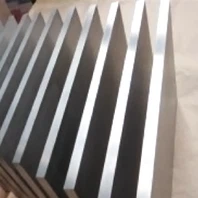
As a reliable supplier of ASTM A514 steel, I've witnessed firsthand the material's widespread use in various high - stress applications, from construction machinery to bridge components. Heat treatment is a crucial process that can significantly enhance the mechanical properties of ASTM A514, making it more suitable for demanding tasks. In this blog, I'll share detailed insights on how to heat - treat ASTM A514 effectively.
Understanding ASTM A514
ASTM A514 is a high - strength, quenched, and tempered alloy steel plate designed to provide excellent strength and toughness. It's commonly used in applications where high yield and tensile strength are required, such as in the construction of cranes, bulldozers, and offshore platforms. The chemical composition of ASTM A514 typically includes elements like carbon, manganese, phosphorus, sulfur, silicon, nickel, chromium, and molybdenum, which contribute to its unique properties.
Pre - heat Treatment Preparations
Before starting the heat - treatment process, it's essential to prepare the ASTM A514 steel properly. First, the steel plates should be inspected for any surface defects, such as cracks, scratches, or rust. Surface imperfections can affect the heat - treatment results and may lead to the formation of cracks during quenching. If any defects are found, they should be removed through grinding or machining.
Next, the steel should be cleaned to remove any dirt, oil, or grease. This can be done using a suitable solvent or degreaser. A clean surface ensures uniform heat transfer during the heat - treatment process.
Heating Process
The heating process is a critical step in heat - treating ASTM A514. The steel should be heated slowly and uniformly to avoid thermal stress and cracking. A recommended heating rate is around 100 - 200°F per hour (55 - 110°C per hour). This slow heating allows the internal structure of the steel to adjust gradually to the increasing temperature.


The austenitizing temperature for ASTM A514 typically ranges from 1550 - 1650°F (843 - 899°C). Austenitizing is the process of heating the steel to a temperature where it forms austenite, a solid solution of iron and carbon. Holding the steel at the austenitizing temperature for an appropriate time is also crucial. The holding time depends on the thickness of the steel plate. As a general rule, for every inch (25.4 mm) of thickness, the steel should be held at the austenitizing temperature for about 1 hour.
Quenching Process
Quenching is the rapid cooling of the austenitized steel. For ASTM A514, quenching is usually done in oil or water, depending on the desired properties and the thickness of the steel. Water quenching provides a faster cooling rate, which results in higher hardness but also increases the risk of cracking. Oil quenching, on the other hand, provides a slower cooling rate and is less likely to cause cracking.
When quenching, the steel should be immersed in the quenching medium as quickly as possible to ensure uniform cooling. The quenching medium should be agitated to prevent the formation of steam pockets around the steel, which can lead to uneven cooling and hardening.
Tempering Process
After quenching, the ASTM A514 steel is extremely hard and brittle. Tempering is the process of reheating the quenched steel to a lower temperature to reduce brittleness and increase toughness. The tempering temperature for ASTM A514 typically ranges from 300 - 1100°F (149 - 593°C), depending on the desired combination of hardness and toughness.
Similar to the heating process, the tempering should be done slowly to avoid thermal stress. The steel should be held at the tempering temperature for a sufficient time, usually 1 - 2 hours per inch (25.4 mm) of thickness. After tempering, the steel should be cooled slowly in air.
Post - heat Treatment Inspection
Once the heat - treatment process is complete, the ASTM A514 steel should be inspected again. Non - destructive testing methods, such as ultrasonic testing or magnetic particle testing, can be used to detect any internal cracks or defects that may have occurred during the heat - treatment process. Hardness testing should also be carried out to ensure that the steel has achieved the desired hardness.
Applications after Heat Treatment
After proper heat treatment, ASTM A514 steel exhibits excellent mechanical properties, making it suitable for a wide range of applications. In the construction industry, it can be used for building high - rise buildings, bridges, and large - scale industrial structures. In the manufacturing of heavy machinery, such as mining equipment and construction vehicles, heat - treated ASTM A514 provides the strength and durability needed to withstand harsh working conditions.
Related Products
If you're interested in exploring other high - strength steel options, you may want to check out our A514GRE Astm A514, S460QL1 690ql Plate, and S550QL Astm A514 Steel Plate. These products also offer excellent performance and can be customized according to your specific requirements.
Conclusion
Heat - treating ASTM A514 is a complex but essential process that can significantly improve the mechanical properties of the steel. By following the proper procedures for pre - treatment, heating, quenching, tempering, and post - treatment inspection, you can ensure that the ASTM A514 steel meets the highest quality standards.
If you're in the market for high - quality ASTM A514 steel or have any questions about heat - treating this material, please don't hesitate to contact us for procurement and further discussions. We're committed to providing you with the best products and technical support.
References
- ASM Handbook Volume 4: Heat Treating. ASM International.
- ASTM A514/A514M - 22: Standard Specification for High - Yield - Strength, Quenched and Tempered Alloy Steel Plate, Suitable for Welding.