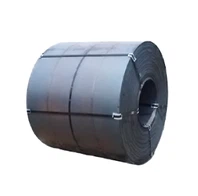
As a supplier of Pipeline Plate X60, I've witnessed firsthand the critical role that heat treatment plays in enhancing the performance and quality of this essential material. In this blog post, I'll delve into the effects of heat treatment on Pipeline Plate X60, exploring its impact on mechanical properties, microstructure, and overall suitability for various applications.
Understanding Pipeline Plate X60
Before we dive into the effects of heat treatment, let's take a moment to understand what Pipeline Plate X60 is and why it's so important. Pipeline Plate X60 is a high-strength, low-alloy steel plate specifically designed for use in the construction of oil and gas pipelines. It offers excellent weldability, toughness, and corrosion resistance, making it an ideal choice for transporting hydrocarbons over long distances.
The demand for Pipeline Plate X60 has been steadily increasing in recent years, driven by the growing global need for energy and the expansion of pipeline infrastructure. As a supplier, we're committed to providing our customers with the highest quality Pipeline Plate X60 that meets or exceeds industry standards.
The Basics of Heat Treatment
Heat treatment is a controlled process that involves heating and cooling a material to alter its physical and mechanical properties. It's a widely used technique in the manufacturing industry, particularly in the production of steel products like Pipeline Plate X60.
There are several different types of heat treatment processes, each with its own unique set of parameters and objectives. The most common heat treatment processes used for Pipeline Plate X60 include annealing, normalizing, quenching, and tempering.
- Annealing: This process involves heating the material to a specific temperature and holding it there for a period of time before slowly cooling it. Annealing is typically used to relieve internal stresses, improve ductility, and refine the microstructure of the material.
- Normalizing: Similar to annealing, normalizing involves heating the material to a specific temperature and then allowing it to cool in air. Normalizing is often used to improve the mechanical properties of the material, such as strength and hardness.
- Quenching: Quenching is a rapid cooling process that involves immersing the heated material in a liquid, such as water or oil. This process is used to increase the hardness and strength of the material by forming a martensitic microstructure.
- Tempering: Tempering is a post-quenching process that involves heating the quenched material to a lower temperature and holding it there for a period of time before cooling it. Tempering is used to reduce the brittleness of the material and improve its toughness and ductility.
Effects of Heat Treatment on Pipeline Plate X60
Now that we have a basic understanding of heat treatment processes, let's explore the specific effects of heat treatment on Pipeline Plate X60.
Mechanical Properties
One of the primary effects of heat treatment on Pipeline Plate X60 is the improvement of its mechanical properties. Heat treatment can significantly increase the strength, hardness, and toughness of the material, making it more resistant to deformation and failure.
For example, quenching and tempering can increase the yield strength and tensile strength of Pipeline Plate X60 by up to 50%. This makes the material more suitable for use in high-pressure applications, such as oil and gas pipelines.
Heat treatment can also improve the ductility and toughness of Pipeline Plate X60, making it more resistant to cracking and fracture. This is particularly important in applications where the material is subjected to dynamic loading or impact forces.
Microstructure
Another important effect of heat treatment on Pipeline Plate X60 is the alteration of its microstructure. Heat treatment can change the size, shape, and distribution of the grains in the material, which can have a significant impact on its mechanical properties.
For example, annealing can refine the grain structure of Pipeline Plate X60, making it more uniform and reducing the size of the grains. This can improve the material's ductility and toughness, as well as its resistance to corrosion and fatigue.
Quenching and tempering can also alter the microstructure of Pipeline Plate X60, forming a martensitic or bainitic microstructure. This can increase the hardness and strength of the material, but it can also make it more brittle. Therefore, tempering is often used after quenching to reduce the brittleness and improve the toughness of the material.

Corrosion Resistance
Heat treatment can also have an impact on the corrosion resistance of Pipeline Plate X60. By altering the microstructure of the material, heat treatment can improve its resistance to corrosion and oxidation.
For example, annealing can reduce the internal stresses in the material, which can help to prevent cracking and corrosion. Quenching and tempering can also improve the corrosion resistance of Pipeline Plate X60 by forming a protective oxide layer on the surface of the material.
Weldability
Weldability is another important property of Pipeline Plate X60, particularly in applications where the material needs to be joined together using welding techniques. Heat treatment can have a significant impact on the weldability of the material, either improving or reducing it depending on the specific heat treatment process used.
For example, annealing can improve the weldability of Pipeline Plate X60 by reducing the internal stresses in the material and making it more ductile. Quenching and tempering, on the other hand, can reduce the weldability of the material by increasing its hardness and brittleness.
Choosing the Right Heat Treatment Process
Choosing the right heat treatment process for Pipeline Plate X60 depends on a variety of factors, including the specific application requirements, the desired mechanical properties, and the available manufacturing equipment.
As a supplier, we work closely with our customers to understand their needs and recommend the most appropriate heat treatment process for their specific application. We also offer a range of heat treatment services, including annealing, normalizing, quenching, and tempering, to ensure that our customers receive the highest quality Pipeline Plate X60 that meets their exact specifications.
Conclusion
In conclusion, heat treatment plays a critical role in enhancing the performance and quality of Pipeline Plate X60. By altering the physical and mechanical properties of the material, heat treatment can improve its strength, hardness, toughness, corrosion resistance, and weldability, making it more suitable for a wide range of applications.
As a supplier of Pipeline Plate X60, we're committed to providing our customers with the highest quality products and services. We have extensive experience in heat treatment processes and can offer customized solutions to meet the specific needs of our customers.
If you're interested in learning more about the effects of heat treatment on Pipeline Plate X60 or if you're looking for a reliable supplier of high-quality Pipeline Plate X60, please don't hesitate to [contact us for procurement and negotiation]. We'd be happy to discuss your requirements and provide you with a quote.
References
- ASME Boiler and Pressure Vessel Code, Section II, Part A - Ferrous Materials
- ASTM International Standards for Steel Plates
- API Specification 5L - Specification for Line Pipe