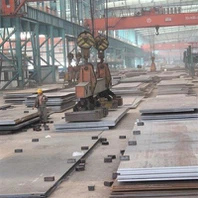
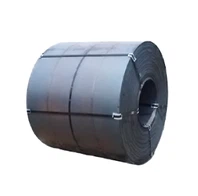
Hey there! As a supplier of low alloy steel plates, I often get asked about the density of these plates. So, I thought I'd take a moment to break it down for you.
First off, let's understand what low alloy steel is. Low alloy steel is a type of steel that contains small amounts of alloying elements, typically less than 5% in total. These alloying elements can include things like manganese, chromium, nickel, and molybdenum. The addition of these elements enhances the steel's properties, such as strength, toughness, and corrosion resistance, compared to plain carbon steel.
Now, onto the main question: what's the density of low alloy steel plates? Well, the density of low alloy steel is generally around 7.85 g/cm³. This value is pretty close to that of plain carbon steel because the small amount of alloying elements doesn't significantly change the overall mass per unit volume.
But why is density important when it comes to low alloy steel plates? Density plays a crucial role in various aspects of the steel industry. For example, when calculating the weight of a steel plate, density is a key factor. If you know the dimensions of the plate (length, width, and thickness) and the density of the steel, you can easily figure out how much the plate weighs. This is super important for transportation, storage, and handling purposes.
Let's say you're planning to order a SM520B low alloy steel plate. You can check out more details about SM520B on our website. Knowing the density helps you estimate the weight of the plate, which in turn affects the shipping costs. A heavier plate will cost more to transport, so having an accurate weight calculation is essential for budgeting.
Another reason density matters is in structural design. Engineers need to know the density of the steel they're using to ensure that the structure can support the weight of the steel components. If the density is miscalculated, it could lead to structural failures or inefficiencies.
Now, it's important to note that the density of low alloy steel can vary slightly depending on the specific alloy composition. Different alloying elements have different densities, and the exact percentage of each element in the steel can influence the overall density. However, these variations are usually quite small and the 7.85 g/cm³ value is a good approximation for most low alloy steel plates.
Let's take a look at another popular low alloy steel grade, A633GRD. You can find more information about A633GRD on our site. Even though it has its own unique set of alloying elements, its density will still be pretty close to the general 7.85 g/cm³ value.
In the manufacturing process, density also affects how the steel behaves. For instance, during casting and forging, the density of the steel influences the flow of the molten metal and the way it solidifies. A consistent density helps ensure that the final product has the desired shape and properties.
When it comes to quality control, density measurements can be used to detect any defects or inconsistencies in the steel plate. If the measured density of a plate deviates significantly from the expected value, it could indicate issues such as porosity, inclusions, or improper heat treatment.
Let's talk about SM490B, another well - known low alloy steel grade. You can learn more about SM490B on our website. Quality control is crucial when supplying these plates, and density checks are an important part of the process.
As a supplier, we make sure to provide accurate information about the density and other properties of our low alloy steel plates. We understand that our customers rely on this data for their projects, whether it's for construction, manufacturing, or any other application.
If you're in the market for low alloy steel plates, we've got a wide range of options to choose from. Our plates are made with high - quality materials and go through strict quality control measures to ensure they meet your requirements. Whether you need a small quantity for a prototype or a large order for a big project, we can help.
So, if you're interested in purchasing low alloy steel plates, don't hesitate to reach out. Our team is ready to assist you with any questions you might have, provide you with detailed product information, and help you make the right choice for your project. We can work with you to determine the best steel grade, size, and quantity based on your specific needs.
In conclusion, the density of low alloy steel plates is an important property that affects many aspects of the steel industry, from weight calculations to structural design and quality control. While the general density is around 7.85 g/cm³, it can vary slightly depending on the alloy composition. If you're looking for reliable low alloy steel plates, we're here to be your trusted supplier. Contact us today to start the conversation about your low alloy steel plate needs.


References:
- Metallurgy textbooks on steel properties
- Industry standards for low alloy steel production and testing