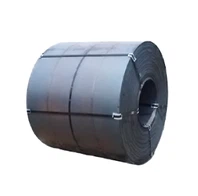
As a supplier of vessel plate A516GR70, I am often asked about the acoustic properties of this material. Understanding these properties is crucial for various applications, especially in the field of pressure vessels where A516GR70 is widely used. In this blog, I will delve into the acoustic characteristics of vessel plate A516GR70, exploring how they impact the performance and quality of the material.
Basic Understanding of Acoustic Properties
Acoustic properties refer to the way a material interacts with sound waves. These properties include sound velocity, attenuation, and acoustic impedance. Sound velocity is the speed at which sound waves travel through a material. It is determined by the material's density and elastic modulus. Attenuation is the reduction in the amplitude of a sound wave as it travels through a material. This is caused by factors such as absorption, scattering, and reflection. Acoustic impedance is the product of the material's density and sound velocity and plays a significant role in the transmission and reflection of sound waves at the interface between two materials.
Sound Velocity in Vessel Plate A516GR70
The sound velocity in vessel plate A516GR70 is an important parameter. It is influenced by the material's composition and microstructure. A516GR70 is a carbon steel with specific chemical composition requirements, including carbon, manganese, phosphorus, sulfur, silicon, and other elements in controlled amounts. The density of A516GR70 is relatively stable, and its elastic modulus is determined by the steel's internal structure.

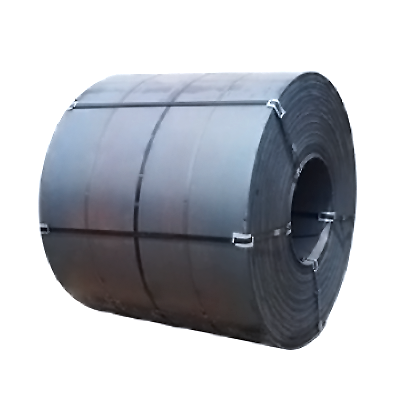
The sound velocity in A516GR70 is typically in a range that allows for effective ultrasonic testing. Ultrasonic testing is a non - destructive testing method widely used in the inspection of pressure vessels. By measuring the time it takes for an ultrasonic wave to travel through the plate and back, the thickness of the plate and the presence of internal defects such as cracks or inclusions can be detected. The relatively consistent sound velocity in A516GR70 ensures the accuracy of these ultrasonic testing results.
Attenuation of Sound Waves
Attenuation of sound waves in vessel plate A516GR70 is another important acoustic property. In a well - made A516GR70 plate, the attenuation is relatively low. This is because the steel has a homogeneous microstructure, and there are few factors that can cause significant absorption or scattering of sound waves.
However, if the plate has internal defects such as porosity, inclusions, or micro - cracks, the attenuation of sound waves will increase. These defects can scatter the sound waves, causing the energy of the waves to be dissipated and the amplitude to decrease. Therefore, measuring the attenuation of sound waves during ultrasonic testing can be an effective way to detect the presence of internal defects in the A516GR70 plate.
Acoustic Impedance and Its Significance
The acoustic impedance of vessel plate A516GR70 is related to its density and sound velocity. When an ultrasonic wave travels from one material to another, the difference in acoustic impedance between the two materials determines the amount of sound wave reflection and transmission at the interface.
In the case of A516GR70, when it is used in a pressure vessel, the acoustic impedance of the plate is important for ensuring good acoustic coupling during ultrasonic testing. If the acoustic impedance of the coupling medium (such as a gel or oil used in ultrasonic testing) and the A516GR70 plate is well - matched, more sound energy will be transmitted into the plate, and the testing results will be more accurate.
Comparison with Other Steel Plates
To better understand the acoustic properties of vessel plate A516GR70, it is useful to compare it with other steel plates. For example, SM490C is a low - alloy steel plate. The chemical composition and microstructure of SM490C are different from those of A516GR70, which leads to differences in their acoustic properties. SM490C may have a different sound velocity and attenuation rate, depending on its specific manufacturing process and alloying elements.
Another example is NM450 Abrasion Resistant Wear Plates. These plates are designed for high - wear applications, and their acoustic properties are also distinct from A516GR70. The high hardness and different alloying elements in NM450 can affect the sound velocity and attenuation, making the ultrasonic testing parameters different from those used for A516GR70.
A573GR58 Carbon Steel Plate A283GRC is also a carbon steel plate. Although it shares some similarities with A516GR70 in terms of being carbon - based, the specific composition and mechanical properties differences result in variations in their acoustic characteristics. These differences need to be considered when choosing the appropriate non - destructive testing methods for each type of plate.
Impact of Acoustic Properties on Vessel Performance
The acoustic properties of vessel plate A516GR70 have a direct impact on the performance and safety of pressure vessels. Accurate ultrasonic testing based on the known acoustic properties can ensure that the plates are free from internal defects. Defects in the plate can weaken the structural integrity of the pressure vessel, leading to potential failures under high - pressure conditions.
Moreover, the acoustic properties can also affect the long - term performance of the vessel. For example, if the plate has areas of high attenuation due to internal defects, it may be more prone to stress concentration and fatigue cracking over time. Therefore, understanding and controlling the acoustic properties of A516GR70 is essential for manufacturing high - quality pressure vessels.
Conclusion and Call to Action
In conclusion, the acoustic properties of vessel plate A516GR70, including sound velocity, attenuation, and acoustic impedance, are critical factors that influence the non - destructive testing, performance, and safety of pressure vessels. Our company, as a professional supplier of A516GR70, ensures that our plates meet the highest standards in terms of acoustic properties and overall quality.
If you are in the market for vessel plate A516GR70 for your pressure vessel project, or if you have any questions about the acoustic properties or other aspects of the material, we welcome you to reach out to us for further discussion and procurement negotiation. We are committed to providing you with the best - quality products and professional technical support.
References
- ASME Boiler and Pressure Vessel Code, which provides standards for the design, fabrication, and inspection of pressure vessels, including requirements related to materials like A516GR70.
- ASTM standards for A516GR70, which detail the chemical composition, mechanical properties, and testing methods for this material.
- Technical literature on ultrasonic testing and acoustic properties of metals, which offers in - depth knowledge on how to measure and interpret the acoustic characteristics of steel plates.