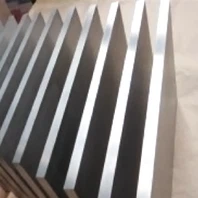
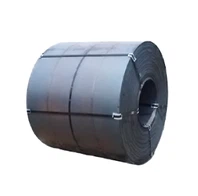
JISG3106 SM490 is a type of steel that belongs to the Japanese Industrial Standards (JIS) for rolled steel plates, sheets, and strips for welded structures. It is widely used in various industries due to its excellent mechanical properties and weldability. In this blog, we will explore the magnetic properties of JISG3106 SM490, which is a crucial aspect for many applications. As a supplier of JISG3106 SM490, we have in - depth knowledge of this material and are eager to share our insights.

Understanding the Basics of Magnetic Properties
Before delving into the magnetic properties of JISG3106 SM490, it is essential to understand some basic concepts of magnetism in metals. Magnetic materials can be classified into three main categories: ferromagnetic, paramagnetic, and diamagnetic. Ferromagnetic materials, such as iron, nickel, and cobalt, have strong magnetic properties and can be magnetized easily. Paramagnetic materials are weakly attracted to magnetic fields, while diamagnetic materials are weakly repelled by magnetic fields.
Magnetic Properties of JISG3106 SM490
JISG3106 SM490 is primarily an iron - based alloy. Iron is a ferromagnetic material, and as a result, JISG3106 SM490 exhibits ferromagnetic behavior. This means that it can be magnetized when exposed to an external magnetic field and will retain some of the magnetization even after the external field is removed.
The magnetic properties of JISG3106 SM490 are influenced by several factors, including its chemical composition and microstructure. The presence of other alloying elements in the steel can modify its magnetic behavior. For example, elements such as carbon, manganese, and silicon are commonly added to JISG3106 SM490 to improve its strength and toughness. These elements can interact with the iron atoms and affect the magnetic domain structure within the steel.
Carbon, in particular, has a significant impact on the magnetic properties of the steel. As the carbon content increases, the magnetic coercivity (the ability to resist demagnetization) of JISG3106 SM490 generally increases. However, excessive carbon content can also lead to a decrease in the magnetic saturation (the maximum magnetization that the material can achieve).
The microstructure of JISG3106 SM490 also plays a crucial role in its magnetic properties. The steel can have different microstructures, such as ferrite, pearlite, and bainite, depending on the heat treatment process. Ferrite is a soft and magnetic phase, while pearlite and bainite have more complex microstructures that can affect the overall magnetic behavior. Heat treatment processes, such as annealing, quenching, and tempering, can be used to control the microstructure and, consequently, the magnetic properties of the steel.

Applications Based on Magnetic Properties
The ferromagnetic properties of JISG3106 SM490 make it suitable for a wide range of applications. In the electrical industry, it can be used in the construction of transformers and electric motors. The ability of the steel to be magnetized and demagnetized efficiently is essential for the proper functioning of these devices.
In the automotive and machinery industries, the magnetic properties of JISG3106 SM490 can be utilized in sensors and actuators. Magnetic sensors can detect the presence or movement of magnetic fields, which can be used for various control and monitoring purposes.

Comparison with Other Steel Grades
When comparing the magnetic properties of JISG3106 SM490 with other steel grades, it is interesting to look at materials like NM450 Abrasion Resistant Wear Plates, S355J2, and A573GR58 Carbon Steel Plate A283GRC.
NM450 is an abrasion - resistant steel. Its main focus is on wear resistance, but it also contains iron and thus has ferromagnetic properties. However, due to its high alloy content for wear resistance, its magnetic properties may be slightly different from JISG3106 SM490. The additional alloying elements in NM450 can disrupt the magnetic domain structure to some extent, leading to differences in magnetic coercivity and saturation.
S355J2 is a European standard low - alloy high - strength structural steel. It has good mechanical properties and is also ferromagnetic. Compared with JISG3106 SM490, the difference in magnetic properties may arise from the differences in chemical composition and the manufacturing process. The European standard may have different requirements for alloying element content, which can influence the magnetic behavior.
A573GR58 Carbon Steel Plate A283GRC is a carbon steel used mainly for general structural applications. Its magnetic properties are similar to JISG3106 SM490 in the sense that they are both ferromagnetic. However, the carbon content and other alloying elements in A573GR58 may be different, resulting in variations in magnetic performance.
Controlling and Measuring Magnetic Properties
As a supplier of JISG3106 SM490, we understand the importance of controlling and measuring the magnetic properties of the steel. To control the magnetic properties, we carefully manage the chemical composition during the steelmaking process. We ensure that the alloying elements are added in the correct proportions to achieve the desired magnetic behavior.
Heat treatment is another crucial step in controlling the magnetic properties. By adjusting the heating and cooling rates, we can obtain the desired microstructure, which in turn affects the magnetic domain structure.
For measuring the magnetic properties, we use advanced testing equipment such as a magnetometer. A magnetometer can measure parameters such as magnetic field strength, magnetic flux density, and magnetic susceptibility. These measurements help us ensure that the JISG3106 SM490 we supply meets the specific magnetic requirements of our customers.
Importance in Quality Control
Magnetic properties are an important aspect of quality control for JISG3106 SM490. In some applications, such as in the manufacturing of precision instruments or electrical components, the magnetic properties need to be within a specific range. Any deviation from the desired magnetic behavior can lead to performance issues in the final product.
By carefully controlling and measuring the magnetic properties, we can guarantee the quality and consistency of our JISG3106 SM490 products. This is essential for building trust with our customers and ensuring that our products meet their high - quality standards.
Conclusion
In conclusion, JISG3106 SM490 exhibits ferromagnetic properties due to its iron - based composition. Its magnetic behavior is influenced by factors such as chemical composition and microstructure. The ferromagnetic nature of this steel makes it suitable for a wide range of applications in the electrical, automotive, and machinery industries.
When compared with other steel grades like NM450 Abrasion Resistant Wear Plates, S355J2, and A573GR58 Carbon Steel Plate A283GRC, there are differences in magnetic properties due to variations in alloying elements and manufacturing processes.
As a supplier of JISG3106 SM490, we are committed to providing high - quality products with well - controlled magnetic properties. If you are interested in purchasing JISG3106 SM490 for your specific applications, we invite you to contact us for procurement and further discussions. We are ready to offer you the best solutions based on our in - depth knowledge and experience in the steel industry.
References
- "Introduction to Magnetic Materials" by C. D. Graham Jr. and J. M. Coey
- "Steel: Processing, Structure, and Performance" by B. C. De Cooman and A. K. S. Tangri
- Japanese Industrial Standards (JIS) for rolled steel plates, sheets, and strips for welded structures.