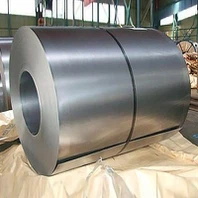
When it comes to construction and industrial applications, cladding steel plates play a crucial role. As a leading supplier of cladding steel plates, I'm often asked about the acoustic properties of these materials. In this blog, I'll delve into the acoustic characteristics of cladding steel plates, sharing insights and knowledge that can be valuable for architects, engineers, and anyone interested in the industry.
Understanding Acoustic Properties in General
Acoustic properties refer to the way a material interacts with sound. This includes how it absorbs, reflects, transmits, or dampens sound waves. In the context of cladding steel plates, these properties can have significant implications for various applications, such as in buildings where sound insulation is important, or in industrial settings where noise reduction is a priority.
Sound absorption is measure of a material's ability to convert sound energy into heat energy. A good sound - absorbing material reduces the amount of sound that is reflected back into the environment. Reflection, on the other hand, is when sound waves bounce off the surface of the material. Transmission occurs when sound passes through the material, and damping is the ability of a material to reduce the amplitude of vibrations that cause sound.
Acoustic Properties of Cladding Steel Plates
Sound Absorption
Cladding steel plates are generally not excellent sound absorbers on their own. Steel is a dense and stiff material, which means that it tends to reflect sound rather than absorb it. When sound waves hit a steel plate, most of the energy is reflected, causing echoes in the area. However, the sound absorption can be enhanced by adding additional layers or treatments. For example, applying a layer of sound - absorbing material on the surface of the cladding steel plate can significantly improve its acoustic performance. Some manufacturers use porous materials, such as fiberglass or mineral wool, which have high sound - absorbing coefficients, to be combined with steel plates.
Sound Reflection
Due to their smooth and hard surfaces, cladding steel plates have a high sound - reflection coefficient. This property can be either an advantage or a disadvantage depending on the application. In some industrial settings, such as in noisy factories, the reflection of sound can be used to direct noise away from certain areas. However, in buildings like concert halls or recording studios, excessive sound reflection can lead to poor acoustic quality, causing reverberation and distortion of the sound.
Sound Transmission
The ability of cladding steel plates to transmit sound depends on several factors, including the thickness of the plate, the type of steel, and the presence of any additional layers. Thicker steel plates generally have a lower sound - transmission coefficient because they can better resist the passage of sound waves. The alloy composition of the steel also plays a role; some alloys may be more effective at blocking sound than others. Additionally, adding damping layers or using composite structures can further reduce sound transmission.
Sound Damping
Damping of cladding steel plates is an important property, especially in applications where reducing vibration - induced noise is essential. Vibration can be caused by machinery, wind, or other external forces. Steel plates can be treated to increase their damping capacity. One common method is to use viscoelastic damping materials. These materials are applied to the steel surface and absorb the vibration energy, converting it into heat. This reduces the amplitude of the vibrations and consequently the noise generated.
Impact of Different Steel Plate Types on Acoustic Properties
S355JR + 304L
The S355JR+304L cladding steel plate combines the strength of S355JR structural steel with the corrosion - resistance of 304L stainless steel. In terms of acoustics, the solid structure of S355JR provides a certain level of sound transmission resistance. However, due to its relatively hard and dense nature, the sound reflection is still high. The 304L stainless steel outer layer adds to the overall durability but does not significantly alter the basic acoustic characteristics of the plate. To improve the acoustic performance of S355JR + 304L plates, additional acoustic treatments may be required.
A537CL2+304L - Stainless Steel Clad Plate
The A537CL2+304L - Stainless Steel Clad Plate is another popular option. A537CL2 is a pressure vessel steel with good strength and toughness. The combination with 304L stainless steel provides good corrosion resistance. In acoustic terms, similar to other steel plates, it has a tendency to reflect sound. However, the specific alloy and manufacturing process of A537CL2 may offer slightly different acoustic properties compared to other steels. The thickness of the plate can also be adjusted to optimize its acoustic performance, especially for sound transmission.
A516GR70 + 304L Clad Plate
The A516GR70 + 304L Clad Plate is often used in applications where high - quality steel is required for pressure - containing vessels. A516GR70 is known for its good weldability and high - temperature performance. The addition of 304L stainless steel enhances the corrosion resistance. In terms of acoustics, the density and structure of A516GR70 contribute to its acoustic behavior. It may have different sound absorption and reflection characteristics compared to other steel plate combinations, making it suitable for specific applications where certain acoustic requirements need to be met.
Applications and Considerations Based on Acoustic Properties
Building Construction
In building construction, the acoustic properties of cladding steel plates are of great importance. For exterior cladding, reducing sound transmission from the outside environment, such as traffic noise or industrial noise, is crucial. This requires the use of cladding steel plates with good sound - blocking capabilities. Interior applications, such as in walls or ceilings, may require plates with enhanced sound - absorption properties to improve the acoustic comfort inside the building.
Industrial Applications
In industrial settings, noise control is a major concern for workplace safety and productivity. Cladding steel plates can be used to enclose noisy machinery or to create barriers that reduce noise propagation. The ability of the plates to reflect, absorb, or dampen sound can be optimized to meet the specific noise - control requirements of the industrial process.
Transportation
In the transportation industry, such as in ships or trains, cladding steel plates are used for various structural and decorative purposes. Controlling the acoustic environment inside these vehicles is important for passenger comfort. The acoustic properties of the plates can be carefully selected to minimize noise from engines, wind, and other sources.
Summary and Call to Action
In summary, the acoustic properties of cladding steel plates are complex and depend on multiple factors, including the type of steel, plate thickness, and any additional treatments. While steel plates have inherent characteristics such as high reflection and relatively low absorption, these properties can be modified to suit different applications.
As a trusted supplier of cladding steel plates, we have a wide range of products to meet your specific needs. Whether you are looking for a solution to reduce sound transmission in a building, control noise in an industrial environment, or enhance the acoustic comfort in a vehicle, our team of experts can assist you in selecting the most suitable cladding steel plate. If you are interested in purchasing cladding steel plates, feel free to contact us for further information and to discuss your requirements. We are committed to providing high - quality products and professional services to ensure your projects' success.
References
- Ballantine, D. S., & Matthews, P. R. (1990). Survey of acoustic properties of building materials. Building and Environment.
- Beranek, L. L. (1971). Noise and vibration control. McGraw - Hill.
- Kinsler, L. E., Frey, A. R., Coppens, A. B., & Sanders, J. V. (2000). Fundamentals of acoustics. John Wiley & Sons.